
There is no doubt the quality of the air you breathe indoors is essential to your health and comfort. World Health Organizations have conducted numerous studies that highlight the adverse effects of poor indoor air quality on one's health. Numerous articles have been published worldwide stressing the significance of poor indoor air quality in schools and the workplace in what is called "Sick Building Syndrome" (SBS).
If you experience headaches, blocked sinuses, fatigue, itchy or watery eyes, dizziness, or upper respiratory congestion, you may be subject to poor indoor air quality conditions. More severe symptoms can include wheezing, rash, hearing loss, chills, fever, nausea, and more. In addition, if you feel better after you leave work or school, you may be spending your day in a building with poor indoor air quality.
What you can’t smell might hurt you. Not all gaseous contaminants — including many volatile organic compounds (VOCs) — can be identified by smell alone.
Productivity Drops. Whether it’s from absenteeism or presenteeism (when people come to work even though they’re sick), sick employees are a drain on business productivity. If allergies, the flu or common colds seem to circulate around your workplace, chances are it could be something in the air. Airborne infections like the common cold and influenza spread when bacteria or viruses travel on dust particles or small respiratory droplets that become aerosolized when an infected person sneezes or coughs. Healthy people can inhale the infectious droplets, or the droplets can land on their eyes, nose and mouth. People who inhale the airborne germs do not have to have face-to-face contact or be in the same room as the infected person.
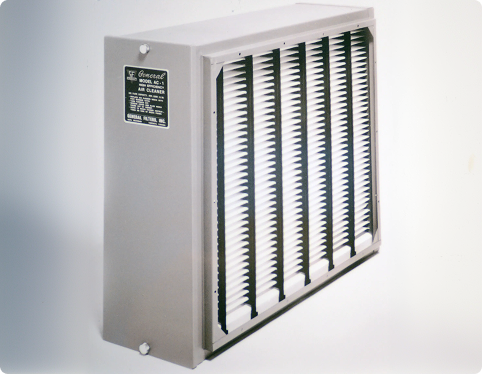
Frequent hand washing, good respiratory hygiene (covering your cough) and rigorous surface sanitation are proven methods for reducing the spread of colds and flu, but viruses, bacteria and allergens can also be carried through the air and spread throughout your facility if they are not removed by an air filtration system. A certified industrial hygienist can identify the size and type of particles in your indoor air and match a particle filtration system to the pollutants you have.
Your particulate air filtration system should be effective in capturing particles under 2.5 microns in diameter. Those tiny particles are the most likely to travel to the deepest part of the lungs, where they can cause health problems.
People Feel Better When They Leave the Building. We’re not just talking about feeling good because the work day is over and free time is starting. We’re talking about Sick Building Syndrome (SBS), a situation in which building occupants experience acute health and comfort effects that appear to be linked to time spent in a building. Typically, those suffering from SBS report relief soon after leaving the building. A related condition is Building Related Illness (BRI). BRI can be attributed directly to airborne building contaminants, and those suffering may require prolonged recovery times after leaving the building.
Ask employees to document their symptoms, including when and where they occur to help find the root of the problem. Take action as soon as possible; it is likely the problem will only get worse if not addressed.
Some estimates place the cost to the U.S. economy of respiratory disease, allergies and asthma, and sick building syndrome to be as high as $48 billion. Providing superior IAQ can improve health, work performance and school performance, as well as reduce health care costs and consequently be a source of substantial economic benefits. Remember that measures resulting in even a small improvement in work performance or absence will often be cost effective because employee costs far exceed the costs of maintaining good IAQ.
One last, but very important point: Ask yourself the same question about your home. Do you feel better when you aren't at home?